
How to Install a Let's Encrypt SSL Certificate in cPanel
SSL (Secure Sockets Layer) encrypts the connection between your website and your visitors, ensuring that all data is transmitted securely over HTTPS. If your domain is hosted on our cPanel hosting, you can install a free Let's Encrypt SSL certificate directly from your cPanel account.
Estimated Time: 2–5 minutes
Requirements:
- Your domain must point to the hosting server.
- DNS records should be fully propagated.
- The website must be hosted in your cPanel account.
Step 1: Log in to cPanel
Log in to your cPanel account using the credentials provided in your hosting welcome email.
Step 2: Check SSL Status
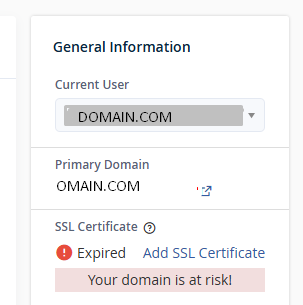
On the right-hand side of your cPanel dashboard, locate the General Information section.
If your SSL certificate has expired or is not installed, you will see a message similar to:
- SSL Certificate: Expired
- Your domain is at risk!
This indicates that your website is currently not protected by HTTPS.
Step 3: Open the SSL/TLS Status Page
From the cPanel home page:
Security → SSL/TLS Status, or at right hand side column of your cPanel reffer following image.
Select the domain from drop down and then click on the "Add SSL certificate" link
Step 4: Request a Let's Encrypt Certificate
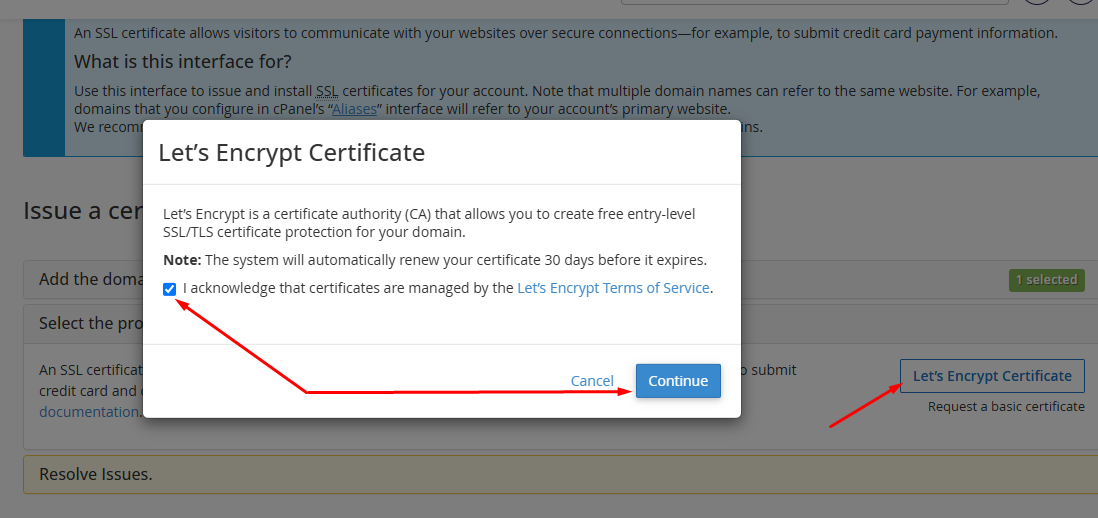
Click the Let's Encrypt Certificate button.
A confirmation window will appear.
-
Check the box:
✓ I acknowledge that certificates are managed by the Let's Encrypt Terms of Service
- Click Continue.
Step 5: Wait for Certificate Installation
Tick the check box next to domain.com, mail.domain.com www.domain.com or *.domain.com and the installation will start
The installation process typically takes between 30 seconds and 5 minutes.
Once completed, the status will change to indicate that the SSL certificate has been successfully installed.
Step 7: Verify HTTPS
Open your website in a web browser using:
https://yourdomain.comYou should see:
- A padlock icon in the browser address bar.
- The website loading securely over HTTPS.
Troubleshooting
The Let's Encrypt button is not available
Possible reasons include:
- The domain is not pointing to the hosting server.
- DNS changes have not yet propagated.
- The domain has not been added to your cPanel account.
- The hosting package does not support Let's Encrypt SSL.
SSL Installation Failed
Common causes include:
- Incorrect DNS records.
- Cloudflare proxy (orange cloud) preventing validation.
- Existing conflicting SSL configuration.
- Firewall or security rules blocking validation.
Wait a few minutes and try again. If the issue persists, contact support.
Website Still Shows "Not Secure"
If the SSL certificate has been installed successfully but the browser still reports "Not Secure":
- Clear your browser cache.
- Ensure your website is loading using https://.
- Update your CMS (such as WordPress) Site URL to HTTPS.
- Force HTTPS redirection if required.